Buy getl.eu ?
We are moving the project
getl.eu .
Are you interested in purchasing the domain
getl.eu ?
domain@kv-gmbh.de · 0541-91531010
Buy getl.eu ?
What are magnification spots?
Magnification spots are areas on a microscope slide where the specimen appears larger than the surrounding areas. These spots can occur due to uneven distribution of the specimen on the slide, uneven thickness of the specimen, or uneven lighting. Magnification spots can make it difficult to accurately observe and analyze the specimen, so it is important to carefully prepare and position the specimen on the slide to minimize their occurrence. **
What does 8x magnification mean?
8x magnification means that the object being viewed through the binoculars or telescope will appear 8 times larger than it would to the naked eye. This means that distant objects will appear closer and more detailed, making it easier to see fine details and observe distant subjects. It is a measure of how much closer the object will appear when viewed through the lens. **

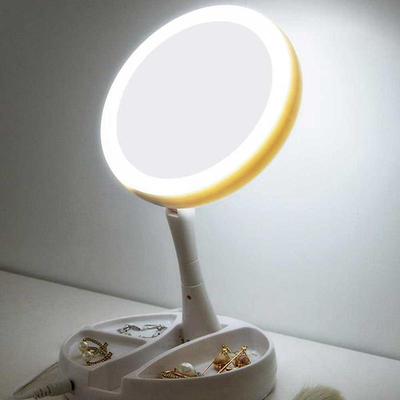
Similar search terms for Magnification
Top-Angebote
Products related to Magnification:
-
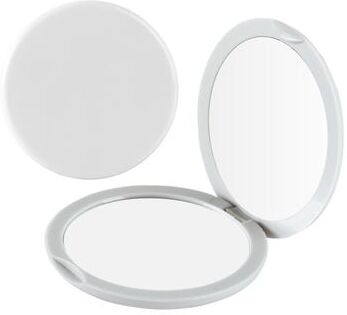
Fusion Finds Compact Travel Makeup Mirror With Magnification & Light whiteEnjoy flawless touchups wherever life takes you with this LED compact mirror designed for beauty on the go. Whether you're getting ready for work, traveling, or refreshing your makeup throughout the day, this travel makeup mirror delivers bright...39,97 $*Shipping: 0,00 $Secure redirect to the provider
-
Fusion Finds UV Sunscreen Mirror With LED Light And 2X Magnification Travel Makeup Mirror UV Sunscreen Mirror With LED Light And 2X Magnification Travel Makeup MirrorFeel confident every time you step outside knowing your sunscreen is applied evenly. This innovative UV sunscreen mirror lets you instantly visualize sunscreen coverage while doubling as a stylish everyday travel makeup mirror. Featuring a builtin...79,97 $*Shipping: 0,00 $Secure redirect to the provider
-
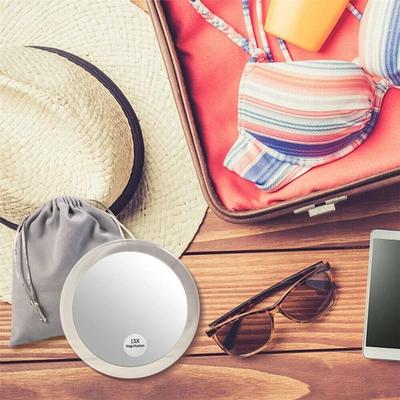
Drop Dash Deals Large Round Makeup Mirror With Magnification, Suction Cup Mount Portable & Travel Friendly Large Round Makeup Mirror With Magnification, Suction Cup Mount Portable & Travel FriendlyGet a flawless look with our 1pc magnifying makeup mirror, designed to give you a clear view for detailed tasks like eyeliner application or brow shaping. The 15x magnification allows you to see every detail, while the sleek, elegant acrylic frame...39,97 $*Shipping: 0,00 $Secure redirect to the provider
-
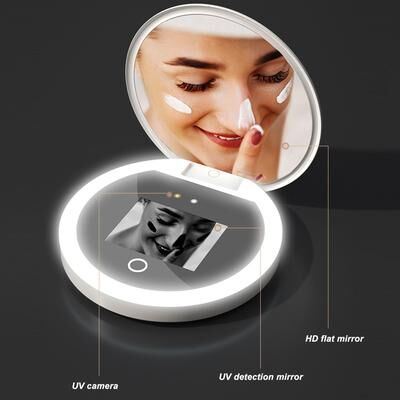
Fusion Finds UV Sunscreen Mirror With UV Camera, LED Compact Travel Makeup Mirror & 2X Magnification UV Sunscreen Mirror With UV Camera, LED Compact Travel Makeup Mirror & 2X MagnificationFeel more confident every time you step outside with this UV sunscreen mirror designed to help you see missed sunscreen coverage before sun exposure. Combining a UV camera mirror, LED lighting, and 2X magnification, it makes skincare and makeup...69,97 $*Shipping: 0,00 $Secure redirect to the provider

-
Why can I see paramecia well at 8x magnification, but not at 20x magnification?
At 8x magnification, the field of view is larger, allowing you to see more paramecia at once. However, at 20x magnification, the field of view is smaller, making it more difficult to locate and focus on individual paramecia. Additionally, higher magnification can sometimes result in a narrower depth of field, making it harder to keep the paramecia in focus. **
-
Why can I see slipper animalcules well at 8x magnification, but not at 20x magnification?
Slipper animalcules are larger microorganisms, so they may be more easily visible at a lower magnification such as 8x. At 20x magnification, the field of view becomes smaller, making it harder to locate and focus on the slipper animalcules. Additionally, higher magnification can sometimes result in a narrower depth of field, making it more challenging to keep the slipper animalcules in focus. **
-
What is the magnification of eyepieces?
The magnification of eyepieces refers to the degree to which they enlarge the image seen through a microscope or telescope. It is determined by the focal length of the eyepiece and the focal length of the objective lens. The magnification of an eyepiece is typically marked on the eyepiece itself, and it is often adjustable by changing the distance between the eyepiece and the objective lens. Higher magnification eyepieces allow for a closer and more detailed view of the object being observed. **
-
How is the magnification factor determined?
The magnification factor is determined by dividing the focal length of the lens by the focal length of the eyepiece being used. This calculation gives the overall magnification of the telescope. For example, if a telescope has a focal length of 1000mm and an eyepiece with a focal length of 10mm is used, the magnification factor would be 100x (1000mm / 10mm = 100x). This factor indicates how much larger an object will appear when viewed through the telescope. **


Which binoculars have a good magnification?
The binoculars with a magnification of 10x or higher are generally considered to have good magnification. These binoculars provide a strong level of magnification, allowing you to see distant objects with great clarity and detail. However, it's important to keep in mind that higher magnification can also lead to a narrower field of view and can make the image appear shakier if not properly stabilized. Therefore, it's important to consider your specific needs and uses for the binoculars when determining the ideal magnification for your purposes. **
At what magnification are satellites visible?
Satellites are typically visible at a magnification of around 10x to 20x using a good pair of binoculars. At this magnification, you can see the glint of sunlight reflecting off the satellite as it moves across the sky. However, the exact magnification needed to see a satellite can vary depending on its altitude, size, and the lighting conditions. **
Top-Angebote
Products related to Magnification:
-
Fusion Finds UV Sunscreen Mirror With LED Light & Magnification Travel Makeup Mirror UV Sunscreen Mirror With LED Light & Magnification Travel Makeup MirrorEnjoy greater confidence every time you step outside with this UV sunscreen mirror designed to help you check sunscreen coverage and perfect your makeup in one compact device. Featuring an advanced UV camera mirror, it lets you view sunscreen...104,97 $*Shipping: 0,00 $Secure redirect to the provider
-
Inspired Deals Foldable LED Makeup Mirror With Magnification Compact Travel Vanity Mirror Foldable LED Makeup Mirror With Magnification Compact Travel Vanity MirrorTired of struggling with poor lighting and unclear reflections This LED makeup mirror is designed for beauty lovers who want precision and confidence wherever they go. Featuring a powerful 10x magnifying mirror, it helps you perfect every detailfrom...44,97 $*Shipping: 0,00 $Secure redirect to the provider
-
Fusion Finds Compact Travel Makeup Mirror With Magnification & Light whiteEnjoy flawless touchups wherever life takes you with this LED compact mirror designed for beauty on the go. Whether you're getting ready for work, traveling, or refreshing your makeup throughout the day, this travel makeup mirror delivers bright...39,97 $*Shipping: 0,00 $Secure redirect to the provider
-
Fusion Finds UV Sunscreen Mirror With LED Light And 2X Magnification Travel Makeup Mirror UV Sunscreen Mirror With LED Light And 2X Magnification Travel Makeup MirrorFeel confident every time you step outside knowing your sunscreen is applied evenly. This innovative UV sunscreen mirror lets you instantly visualize sunscreen coverage while doubling as a stylish everyday travel makeup mirror. Featuring a builtin...79,97 $*Shipping: 0,00 $Secure redirect to the provider
-
What are magnification spots?
Magnification spots are areas on a microscope slide where the specimen appears larger than the surrounding areas. These spots can occur due to uneven distribution of the specimen on the slide, uneven thickness of the specimen, or uneven lighting. Magnification spots can make it difficult to accurately observe and analyze the specimen, so it is important to carefully prepare and position the specimen on the slide to minimize their occurrence. **
-
What does 8x magnification mean?
8x magnification means that the object being viewed through the binoculars or telescope will appear 8 times larger than it would to the naked eye. This means that distant objects will appear closer and more detailed, making it easier to see fine details and observe distant subjects. It is a measure of how much closer the object will appear when viewed through the lens. **
-
Why can I see paramecia well at 8x magnification, but not at 20x magnification?
At 8x magnification, the field of view is larger, allowing you to see more paramecia at once. However, at 20x magnification, the field of view is smaller, making it more difficult to locate and focus on individual paramecia. Additionally, higher magnification can sometimes result in a narrower depth of field, making it harder to keep the paramecia in focus. **
-
Why can I see slipper animalcules well at 8x magnification, but not at 20x magnification?
Slipper animalcules are larger microorganisms, so they may be more easily visible at a lower magnification such as 8x. At 20x magnification, the field of view becomes smaller, making it harder to locate and focus on the slipper animalcules. Additionally, higher magnification can sometimes result in a narrower depth of field, making it more challenging to keep the slipper animalcules in focus. **
Similar search terms for Magnification
-
Drop Dash Deals Large Round Makeup Mirror With Magnification, Suction Cup Mount Portable & Travel Friendly Large Round Makeup Mirror With Magnification, Suction Cup Mount Portable & Travel FriendlyGet a flawless look with our 1pc magnifying makeup mirror, designed to give you a clear view for detailed tasks like eyeliner application or brow shaping. The 15x magnification allows you to see every detail, while the sleek, elegant acrylic frame...39,97 $*Shipping: 0,00 $Secure redirect to the provider
-
Fusion Finds UV Sunscreen Mirror With UV Camera, LED Compact Travel Makeup Mirror & 2X Magnification UV Sunscreen Mirror With UV Camera, LED Compact Travel Makeup Mirror & 2X MagnificationFeel more confident every time you step outside with this UV sunscreen mirror designed to help you see missed sunscreen coverage before sun exposure. Combining a UV camera mirror, LED lighting, and 2X magnification, it makes skincare and makeup...69,97 $*Shipping: 0,00 $Secure redirect to the provider
-
Fusion Finds Lighted Makeup Mirror With Magnification Compact Travel Pocket Mirror whiteExperience flawless touchups wherever life takes you with this lighted makeup mirror designed for beauty on the go. Featuring a sleek folding design, builtin LED lighting, and a 2X magnifying mirror, it helps you apply makeup, groom brows, or check...35,97 $*Shipping: 0,00 $Secure redirect to the provider
-
Fusion Finds Rechargeable LED Makeup Mirror With 3 Color Lights & 10X Magnification For Travel And Vanity Rechargeable LED Makeup Mirror With 3 Color Lights & 10X Magnification For Travel And VanityMake every touchup look flawless, wherever life takes you. This travel makeup mirror is designed for beauty lovers who need salonquality lighting and precision on the go. Featuring three adjustable LED light modes, a rechargeable battery, and a...49,97 $*Shipping: 0,00 $Secure redirect to the provider
-
What is the magnification of eyepieces?
The magnification of eyepieces refers to the degree to which they enlarge the image seen through a microscope or telescope. It is determined by the focal length of the eyepiece and the focal length of the objective lens. The magnification of an eyepiece is typically marked on the eyepiece itself, and it is often adjustable by changing the distance between the eyepiece and the objective lens. Higher magnification eyepieces allow for a closer and more detailed view of the object being observed. **
-
How is the magnification factor determined?
The magnification factor is determined by dividing the focal length of the lens by the focal length of the eyepiece being used. This calculation gives the overall magnification of the telescope. For example, if a telescope has a focal length of 1000mm and an eyepiece with a focal length of 10mm is used, the magnification factor would be 100x (1000mm / 10mm = 100x). This factor indicates how much larger an object will appear when viewed through the telescope. **
-
Which binoculars have a good magnification?
The binoculars with a magnification of 10x or higher are generally considered to have good magnification. These binoculars provide a strong level of magnification, allowing you to see distant objects with great clarity and detail. However, it's important to keep in mind that higher magnification can also lead to a narrower field of view and can make the image appear shakier if not properly stabilized. Therefore, it's important to consider your specific needs and uses for the binoculars when determining the ideal magnification for your purposes. **
-
At what magnification are satellites visible?
Satellites are typically visible at a magnification of around 10x to 20x using a good pair of binoculars. At this magnification, you can see the glint of sunlight reflecting off the satellite as it moves across the sky. However, the exact magnification needed to see a satellite can vary depending on its altitude, size, and the lighting conditions. **
* All prices are inclusive of VAT and, if applicable, plus shipping costs. The offer information is based on the details provided by the respective shop and is updated through automated processes. Real-time updates do not occur, so deviations can occur in individual cases. ** Note: Parts of this content were created by AI.